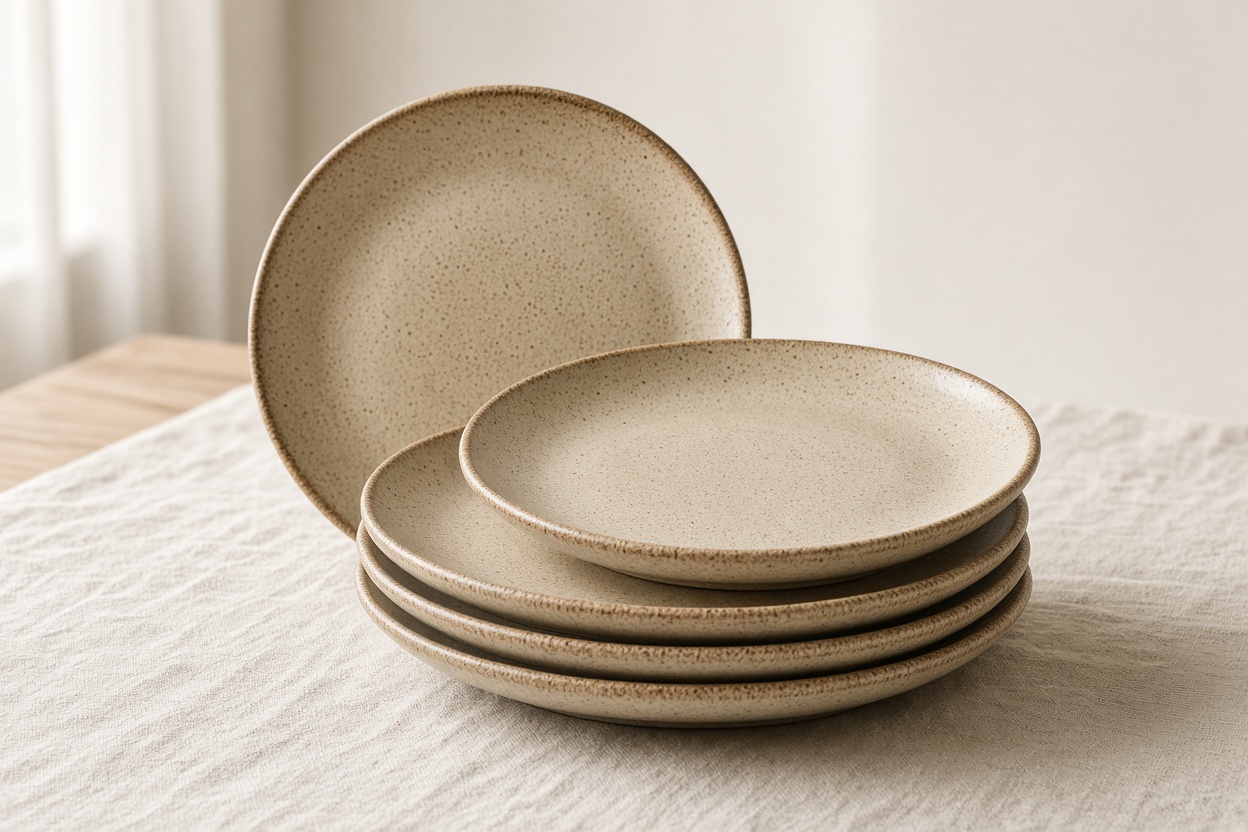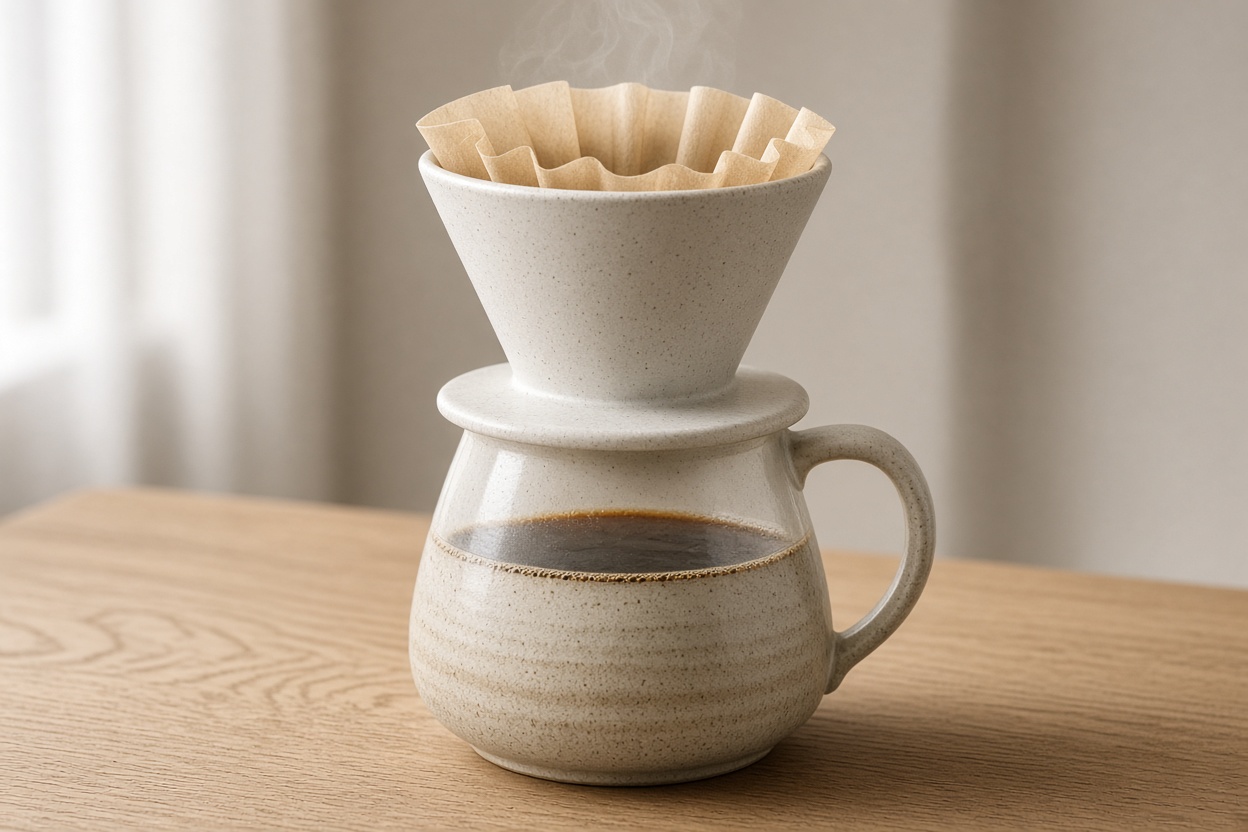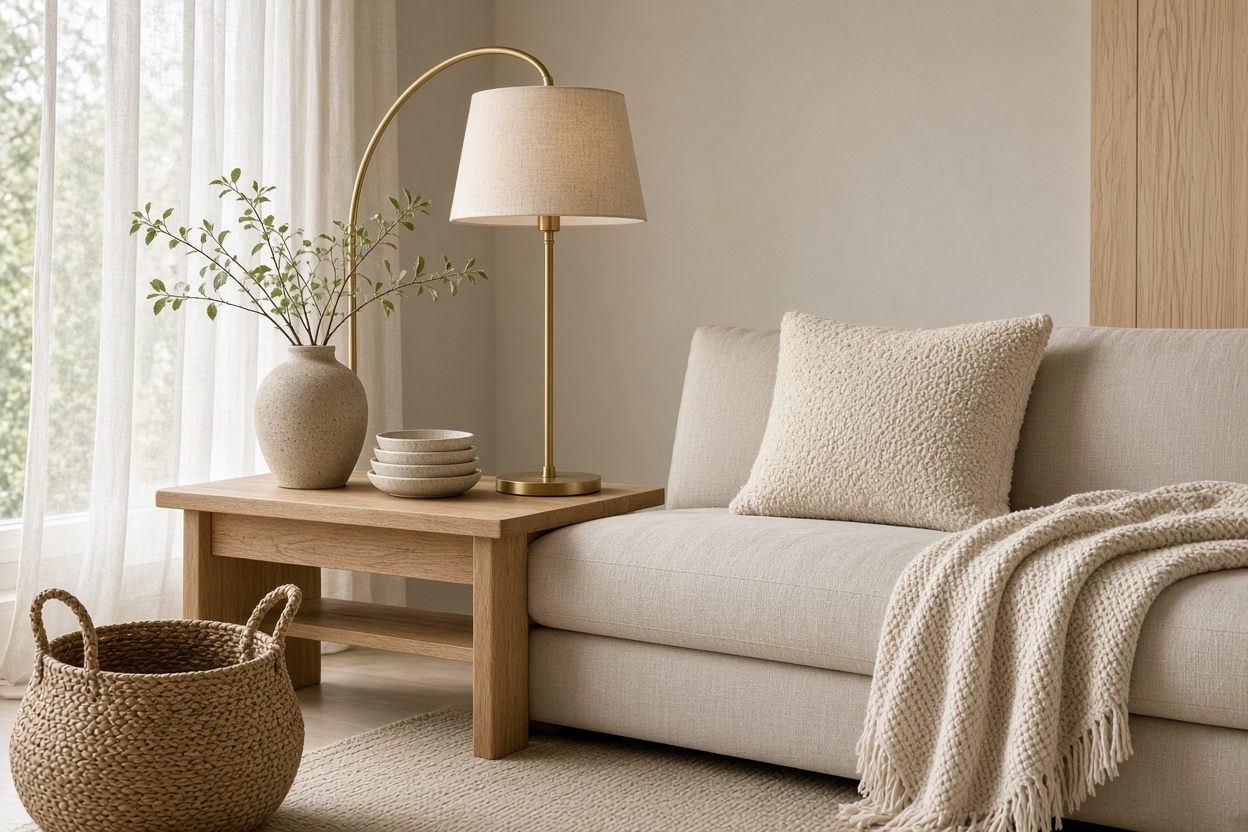
When we started Neuryza, we wrote a short list of materials we wanted to build the store around: solid wood, hand-loomed cotton, washed linen, wool, natural stone and hand-glazed clay. Two years and a lot of samples later, that list has barely changed. Here is why.
The materials we chose all age well. A stoneware plate develops fine crazing over years of use; a leather tray softens under a wristwatch; a linen runner grows a little more relaxed after every wash. That gentle patina is the opposite of what happens with polyester, MDF or fast plastics, which usually look worse each year.
They are also honest. What you see is what the object is. There is no veneer over particleboard, no polymer coating imitating stone, no dye masking the grain. When something breaks, we can tell you exactly what it was made of and, in most cases, how to repair it.
Before we add anything to the collection, we use it at home for at least a month. We wash it, spill on it, drop it, pack it into suitcases. If it does not survive real life, it does not survive the review.
Finally, we keep the list short on purpose. Fewer materials means we can build deep relationships with our workshops, understand their processes and pay a fair price without cutting corners. It also means the pieces we sell look and feel like they belong together, whether you buy one or ten.
— The Neuryza team